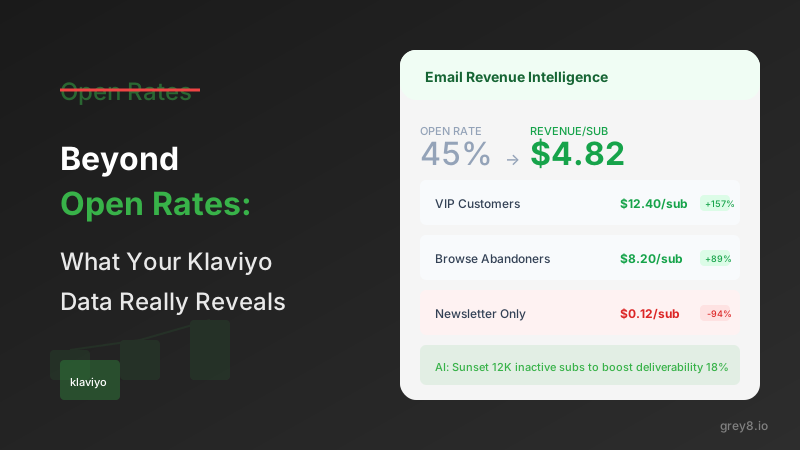
A 40% open rate feels like a win. But what if those opens generated $200 in revenue while your 20% open rate campaign generated $5,000? Email marketers obsess over engagement metrics that correlate poorly with the only metric that matters: revenue per subscriber.
The Engagement Trap: Open rates and click rates measure attention. Revenue per subscriber measures profit. They're not the same thing—and optimizing for one often hurts the other.
1. Revenue Per Subscriber (RPS)
This is the single most important email metric. Total email-attributed revenue divided by total subscribers reveals whether you're building a profitable email channel—or just sending messages into the void.
Klaviyo shows total email revenue. Grey8 calculates RPS automatically and breaks it down by segment, acquisition source, and subscriber tenure. Discover which segments are worth nurturing vs. which ones dilute your average.
2. Flow Revenue vs. Campaign Revenue
Automated flows (welcome, abandoned cart, post-purchase) typically generate 60-80% of email revenue despite being "set and forget." One-time campaigns get all the attention but drive far less profit per hour invested.
Grey8 Advantage: Automatically compares flow performance to campaign performance and flags underperforming flows. Most brands discover their welcome series is converting 50% below benchmark—costing them thousands in missed revenue.
Target: Flow revenue should exceed campaign revenue 2:1. If campaigns dominate your email revenue, you're under-invested in automation—and leaving money on the table.
3. List Growth Quality (Not Just Quantity)
Growing your list by 1,000 subscribers sounds great—until you realize 800 of them never open an email. List growth rate matters less than list growth quality: how many new subscribers actually engage and purchase?
Track these quality metrics by acquisition source:
- First purchase rate within 30 days
- Average revenue from new subscribers (first 90 days)
- Engagement rate (opened 3+ emails in first 30 days)
Pro Tip: A pop-up offering 20% off will grow your list fast—with low-quality, discount-hunting subscribers. A content upgrade or quiz will grow slower—with high-intent, high-value subscribers. Know the difference.
Grey8 automatically scores new subscriber cohorts by acquisition source and flags low-quality sources before they tank your deliverability and RPS.
4. Segment Revenue Contribution
Not all subscribers are created equal. Your VIP segment (3+ purchases) likely generates 10X the revenue per subscriber as your "engaged but never purchased" segment. But are you treating them differently?
Klaviyo lets you build segments. But it doesn't automatically show you which segments drive revenue and which ones are noise. Most brands discover that 20% of segments generate 80% of email revenue.
Grey8 ranks your segments by revenue contribution and flags segments with high count but low revenue (list bloat) vs. small segments with outsized impact (where to focus).
5. Time-to-Purchase by Campaign/Flow
Some emails drive immediate purchases (abandoned cart recovery). Others plant seeds for future purchases (educational content). Knowing which campaigns drive short-term vs. long-term revenue helps you optimize send strategy.
Hidden Truth: Campaigns with low immediate conversion but high 7-day conversion are building brand equity. Campaigns with high immediate conversion but zero delayed conversion are one-hit wonders. Both matter, but for different reasons.
Klaviyo attributes revenue to the campaign that drove the click. But it doesn't break down immediate vs. delayed conversion—so you can't distinguish between urgency-driven clicks and consideration-driven clicks.
Grey8 calculates purchase lag by campaign and flow type, revealing which messages drive urgency and which ones nurture intent over time.
From Vanity Metrics to Revenue Reality
Open rates and click rates are important—but they're leading indicators, not outcomes. Revenue per subscriber is the outcome. And most email marketers never calculate it properly.
Klaviyo gives you campaign-level revenue. Grey8 gives you subscriber-level economics. The difference? One helps you celebrate wins. The other helps you predict and grow profit.
Open rates make you feel good. Revenue-per-subscriber makes you money. Grey8 helps you track what matters.